

Roofing Materials
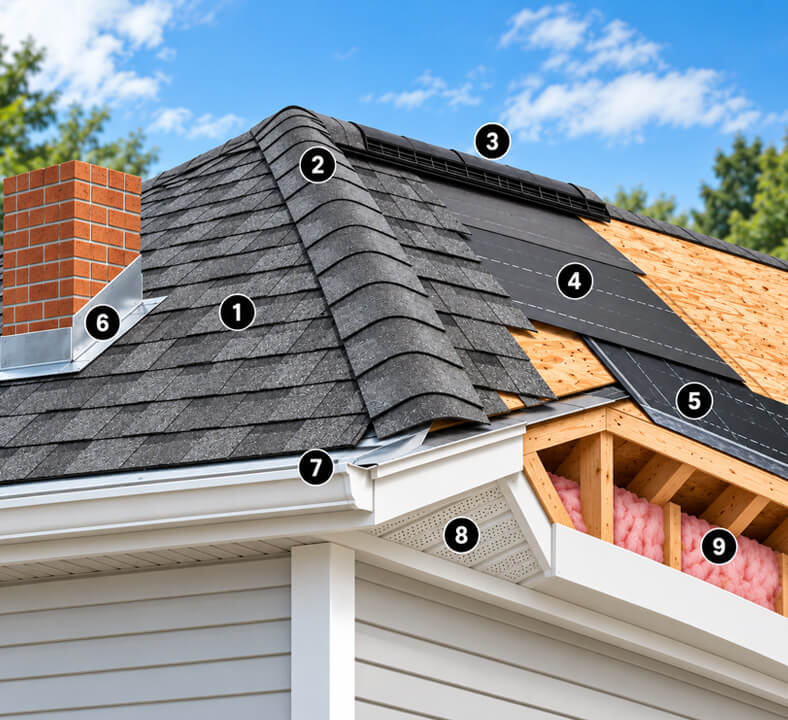
The roof covering accounts for a substantial share of material costs, but the layers and accessories beneath and around it also affect performance and price. Some components are automatically included in a roof replacement quote, but others depend on their existing condition or the roofing system you choose.
- Shingles:
Your shingles affect material cost, weight, appearance, and installation requirements. Starter shingles at roof edges are another component that should be identified in an asphalt roofing quote. - Hip & Ridge Shingles:
These caps cover the joints along roof peaks and hips. More hips and ridges require additional cap material and installation labor. - Ventilation:
Vented attic systems need compatible intake and exhaust ventilation. Replacing damaged vents or correcting an inadequate layout can add materials and labor. - Underlayment:
This layer provides secondary protection beneath the roof covering. Its type, fastening, coverage, and compatibility with the selected roof affect cost. - Ice & Water Shield:
Self-adhering protective membranes help manage water intrusion in Florida roofing assemblies. Required coverage depends on the approved system, and the membrane must be suitable for the roof covering and installation. - Flashing:
Metal flashing directs water away from walls, valleys, chimneys, and penetrations. Custom fabrication and complicated transitions increase material and labor costs. - Drip Edge:
This metal trim directs water away from roof edges. Its length, material, and required fastening contribute to the replacement price. - Soffit & Fascia:
Deteriorated boards or panels may need repair before completing roof-edge work. Replacement should be listed separately when it extends beyond the roofing scope. - Insulation:
Replacing attic insulation is generally separate from replacing a pitched roof covering. Insulation within a low-slope roof assembly, including wet or tapered insulation, can directly affect flat roof replacement costs.